
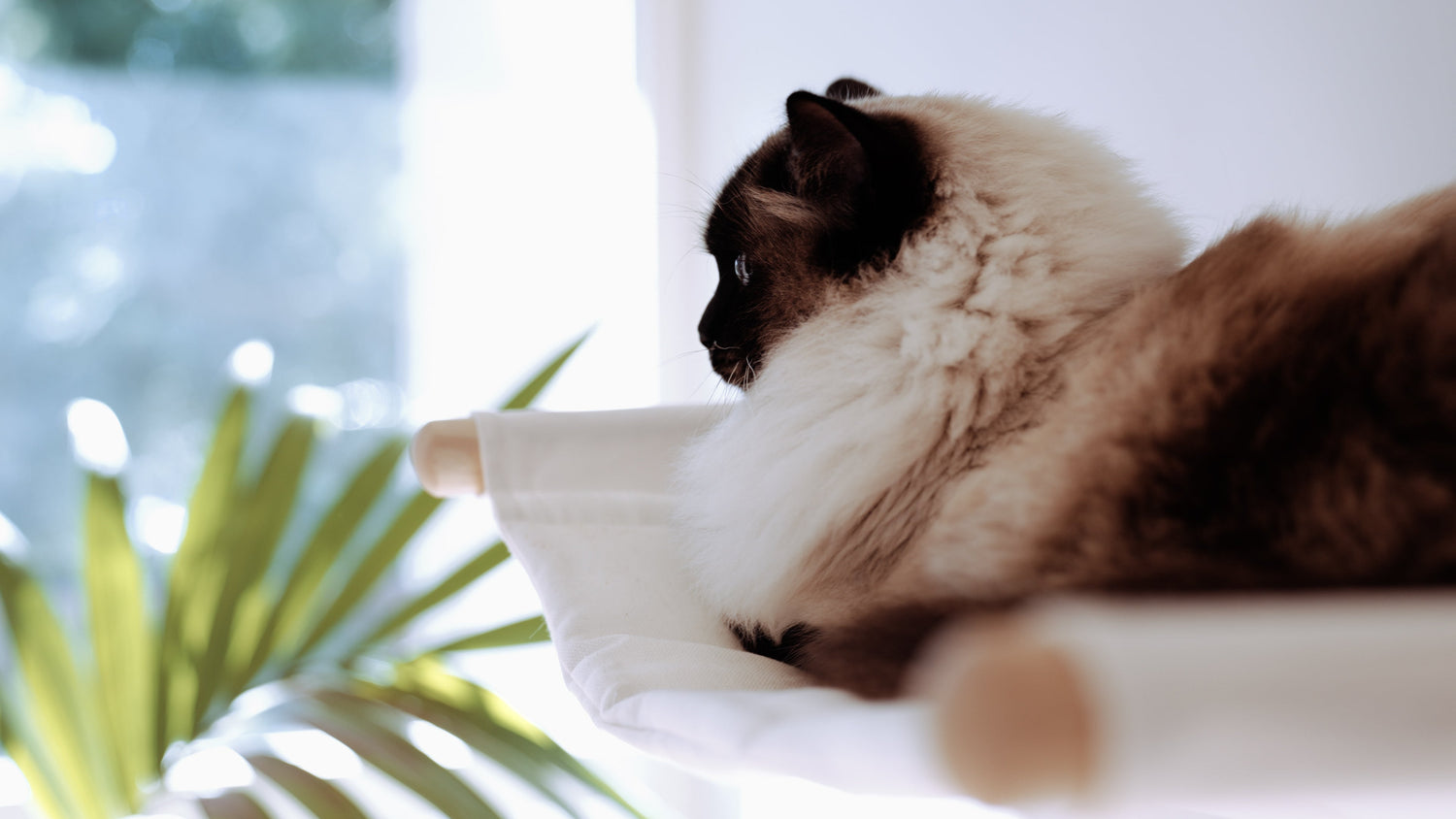
One was informed that humans now speak of “enrichment” — as though one, a creature of impeccable instinct and considerable majesty, required enriching like a breakfast cereal. The cheek of it, kitten. And yet, one supposes one must be honest: trapped indoors with nothing to conquer, even a queen grows restless. So. Let one settle the question once and for all. — Ruby
First, what does "cat enrichment" actually mean?
Strip away the marketing and “enrichment” means something simple: giving a cat outlets for its natural behaviours. Cats are built to hunt, climb, scratch, perch, explore and survey their territory. Enrichment is just the practice of letting them do those things inside a home.
That is the important distinction. Enrichment isn’t a pile of products — it’s meeting instincts. A cardboard box can be enrichment. A sunny windowsill can be enrichment. The question isn’t whether you’ve bought enough cat things; it’s whether your cat can express the behaviours it’s wired for.
So do cats actually need it? The honest answer
Here is the honest version, from a brand that sells cat furniture: the word “enrichment” is overused, but the need behind it is real and well established in veterinary behaviour science.
Cats are not domesticated in the way dogs are; they remain close to their wild, solitary-hunter ancestors. Veterinary guidelines on cats’ environmental needs are built around the same core ideas: cats need safe places, outlets for hunting and play, and a sense of control over their territory. Indoor life is safer and usually longer — but it strips away most of those natural opportunities unless we deliberately put them back. That deliberate replacement is what “enrichment” really describes. So yes, cats need it. It simply isn’t a product category — it’s a set of needs.
What happens to a cat without enough of it
A chronically under-stimulated cat doesn’t simply get “a bit bored.” A lack of appropriate outlets is linked to real problems: stress and anxiety, destructive scratching or climbing, attention-seeking and night-time hyperactivity, over-grooming, tension between cats, litter box issues, and weight gain from inactivity. Ongoing stress can even contribute to certain health conditions. None of this means a slightly bored cat is in crisis — but it does mean enrichment sits closer to a genuine need than a nice-to-have.
How to tell if your cat needs more enrichment
You don’t need a checklist of products — you need to read your cat. Signs a cat may be under-stimulated include scratching or climbing things you’d rather they didn’t, waking you for attention or tearing around at night, destructiveness, sleeping a great deal but seeming disengaged when awake, over-grooming, or steady weight gain. A well-enriched cat tends to be calmer, more confident, and content to occupy itself.
One caveat worth stating plainly: a sudden change in behaviour, appetite, grooming or activity can signal a medical issue, not just boredom. If something shifts noticeably, a vet check comes first.
What actually works (and what's just noise)
Not all “enrichment” is equal. The things that reliably make a difference map directly onto a cat’s instincts:
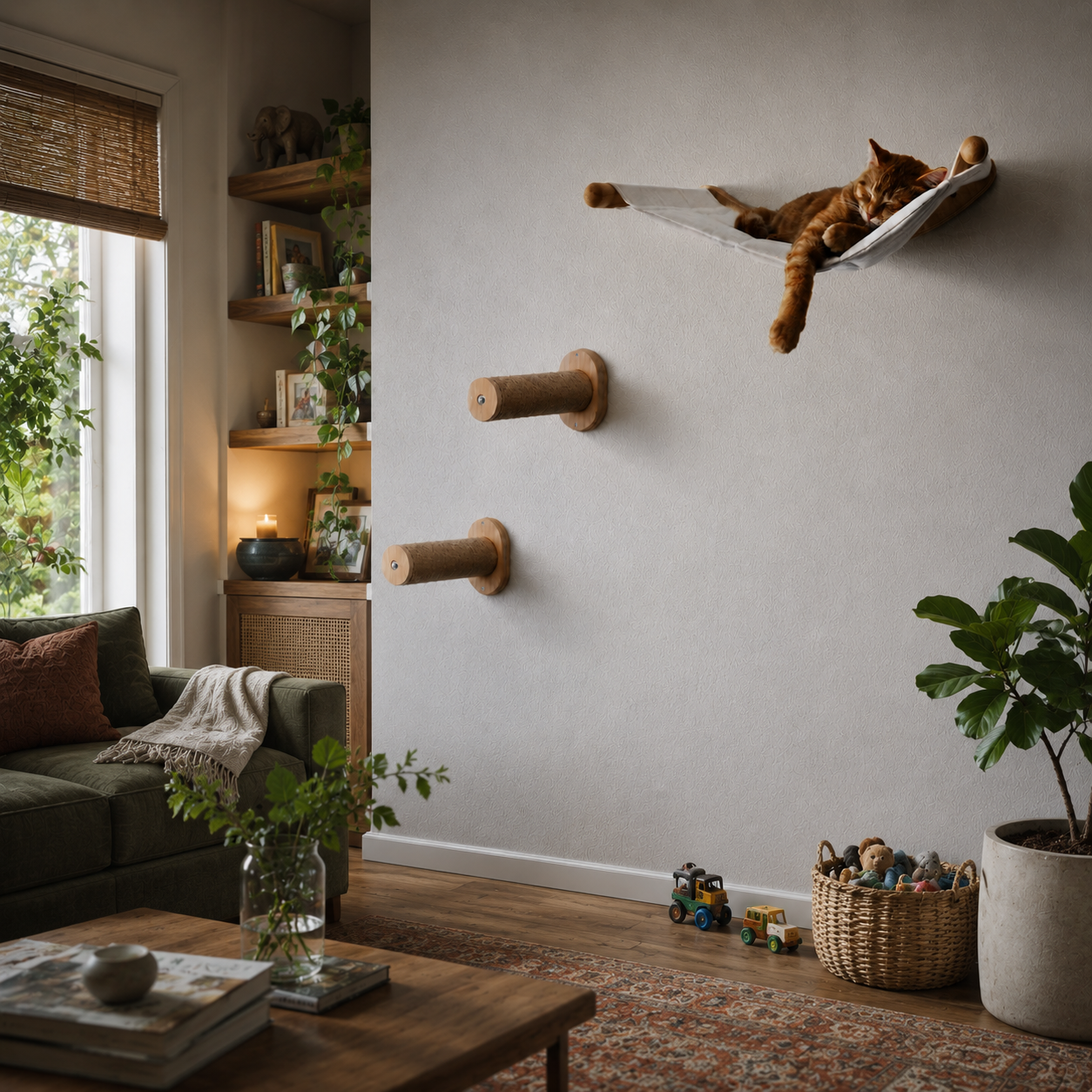
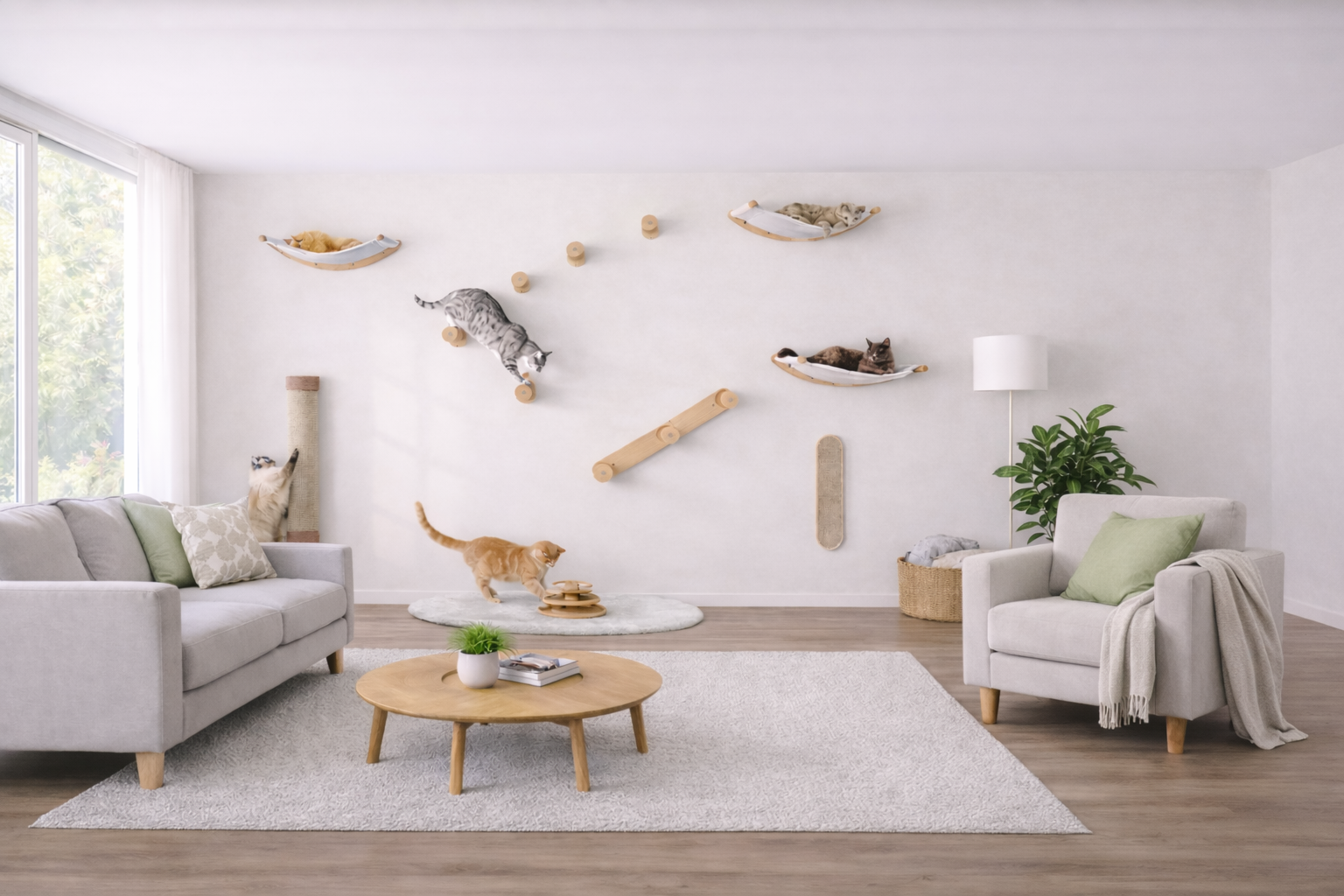
Vertical space is the biggest single win. Being able to climb and perch up high satisfies a deep instinct for safety and surveillance. This is exactly what wall-mounted pieces like our HALTO and ALTO hammocks provide — an elevated perch, and in ALTO’s case a climbing route too.
Scratching outlets let a cat condition its claws and mark territory; a dedicated scratcher, such as one with a replaceable sisal pad, redirects that instinct away from your sofa.
Daily interactive play — around ten minutes of wand or chase play — lets a cat complete the hunt sequence and burn energy.
Foraging and food puzzles, window views, and safe retreats round things out. What’s mostly noise: piles of plastic toys that get ignored after a day. Novelty matters far less than matching real instincts.
The honest bottom line
Enrichment isn’t a marketing invention — it’s a genuine set of needs dressed up in a buzzword. But you don’t need to buy everything. Cover the core instincts — somewhere to climb and perch, something proper to scratch, and a little daily play — and your cat is genuinely enriched. A few well-made pieces beat a cupboard of gadgets. You can build a simple, cohesive setup from the full collection and accessories.
So there is your answer, kitten: one does require “enrichment” — though one prefers to think of it as the bare minimum one is owed. Provide one a wall to climb, a post upon which to sharpen one’s claws, and the occasional thrilling pursuit of a feathered thing on a string, and one shall want for nothing. Well. Nothing one would admit to. — Ruby
Frequently asked questions
Do indoor cats really need enrichment?
Yes. Indoor cats are safer and tend to live longer, but indoor life removes most of the natural opportunities to hunt, climb, scratch and explore. Enrichment deliberately puts those outlets back, which supports a cat’s physical and mental wellbeing.
What is cat enrichment?
Cat enrichment means giving a cat ways to express its natural behaviours — climbing, perching, scratching, hunting and exploring. It’s about meeting instincts rather than buying products; a box, a window perch or ten minutes of play all count.
Is cat enrichment just a marketing term?
The word is overused in marketing, but the underlying need is real and supported by veterinary behaviour science. The honest distinction is that enrichment describes a set of needs, not a product category — you can meet many of them for free.
How do I know if my cat is bored or under-stimulated?
Common signs include destructive scratching or climbing, night-time hyperactivity, attention-seeking, over-grooming and weight gain from inactivity. Because these can also have medical causes, see a vet if your cat’s behaviour changes suddenly.
What is the most important type of enrichment for cats?
Vertical space is widely considered the highest-impact enrichment, because climbing and perching up high satisfy a strong instinct for safety and surveillance. Scratching outlets and daily interactive play follow closely.
How much enrichment does a cat need each day?
At a minimum, a cat should have constant access to climbing and perching spots and a scratching surface, plus around ten minutes of interactive play a day. Consistency and matching your cat’s instincts matter more than sheer quantity.

Leave a comment
This site is protected by hCaptcha and the hCaptcha Privacy Policy and Terms of Service apply.