
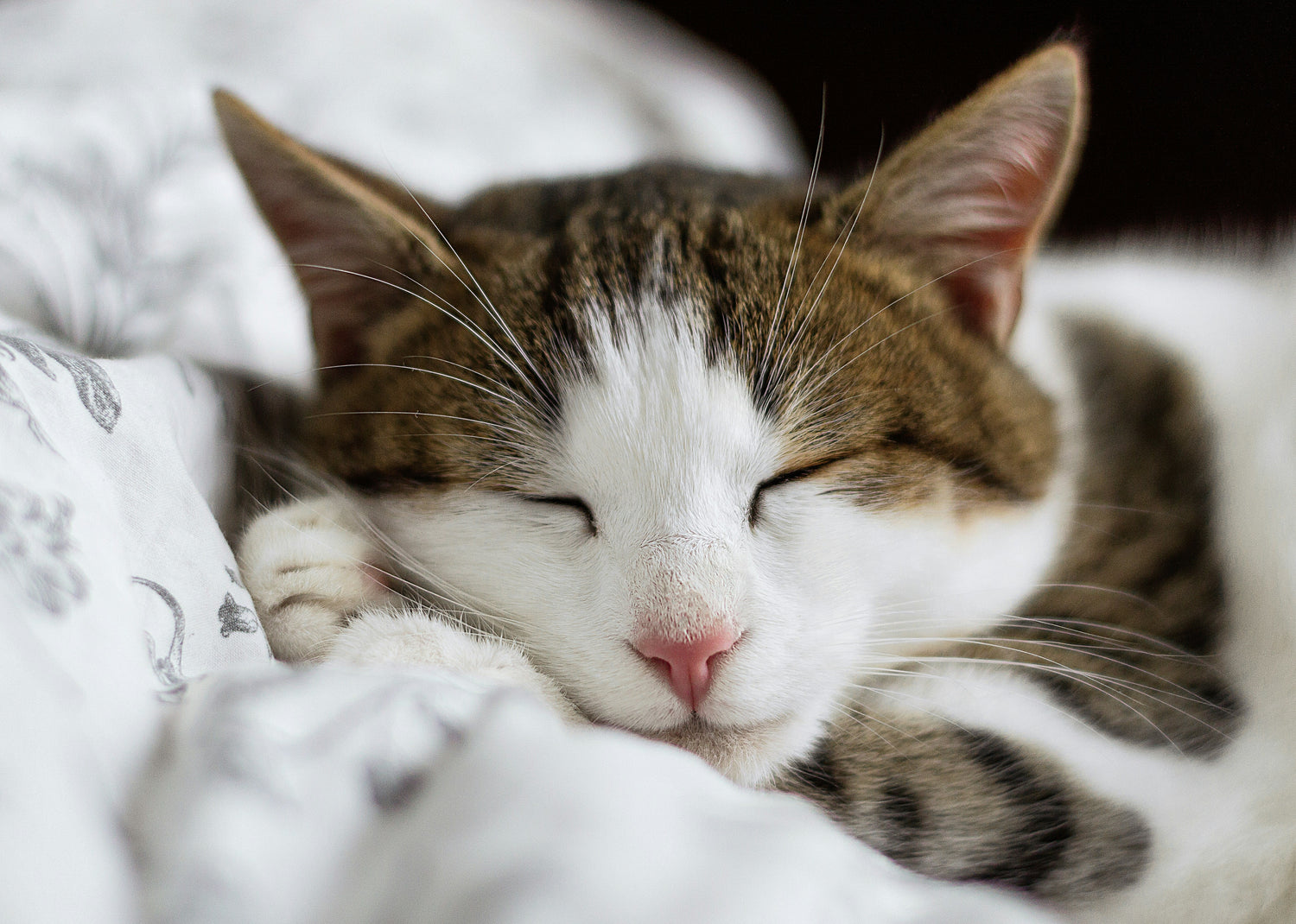
One has been informed that one’s human has begun to “worry” about the quantity of one’s repose. How touching. How tediously human. Allow one to clarify: one is not lazy — one is simply a well-evolved feline who knows the value of a good rest between adventures. Do sit down. One shall explain. — Ruby
How much do cats actually sleep?
If you’ve ever wondered why does my cat sleep so much, the short answer is: because that’s exactly what a healthy cat is built to do. Most adult cats sleep between 12 and 16 hours a day. Kittens and senior cats sleep even more — often up to 18 to 20 hours — because growing, healing and ageing all demand extra rest.
So a cat that seems to spend most of the day asleep is, in almost all cases, completely normal. Cats simply distribute their sleep differently to us: instead of one long stretch overnight, they take many shorter naps across the day and night.
Why do cats sleep so much?
Cats are crepuscular — naturally most active at dawn and dusk, the prime hunting hours of their wild ancestors. The rest of the day is built around conserving energy for those short, intense bursts. A few instincts drive a cat’s long sleeping habits:
Energy conservation. Hunting is metabolically expensive. Even though your cat’s “hunt” is now a full food bowl, the instinct to bank energy between bursts of activity remains.
Light, alert dozing. Much of a cat’s sleep is light napping — the famous cat nap — from which they can wake instantly. Only a portion is deep, restorative sleep, which is why a sleeping cat’s ears still swivel toward sound.
Growth and repair. Deep sleep is when the body repairs tissue and consolidates memory, which is exactly why kittens and older cats need more of it.
Is my cat sleeping too much?
Long sleep is normal, but a sudden change in your cat’s sleep pattern is worth a closer look. Speak to your vet if your cat is sleeping noticeably more or less than usual alongside any of these: loss of appetite, hiding more than normal, lethargy or reluctance to move, changes in litter box habits, or weight loss. Sleep itself is rarely the issue — it’s a change in the wider pattern that’s the signal. When in doubt, a vet check is always the safest call.
Where your cat sleeps matters more than you think
Here is the part most humans miss. A cat doesn’t choose a sleeping spot at random — the location is a deliberate decision driven by deep instinct. The best feline sleeping spots share four qualities:
Elevated. Height equals safety. A raised perch lets a cat survey the room and sleep without feeling vulnerable from below — which is why cats gravitate to the top of the wardrobe, the back of the sofa and the windowsill.
Warm. Cats run warmer than we do and seek out heat to sleep comfortably, hence the devotion to sunbeams and laps.
Safe and semi-enclosed. A spot with a wall behind it or a clear sight line lets a cat relax fully into deep sleep.
Quiet. Away from foot traffic and noise, so naps aren’t constantly interrupted.
When a cat can’t find a spot that ticks these boxes, you tend to see the consequences: sleeping in inconvenient places, restlessness, or claiming the one warm, high surface you’d rather they didn’t — your clean laundry, your keyboard, your pillow.
How to give your cat a better place to sleep
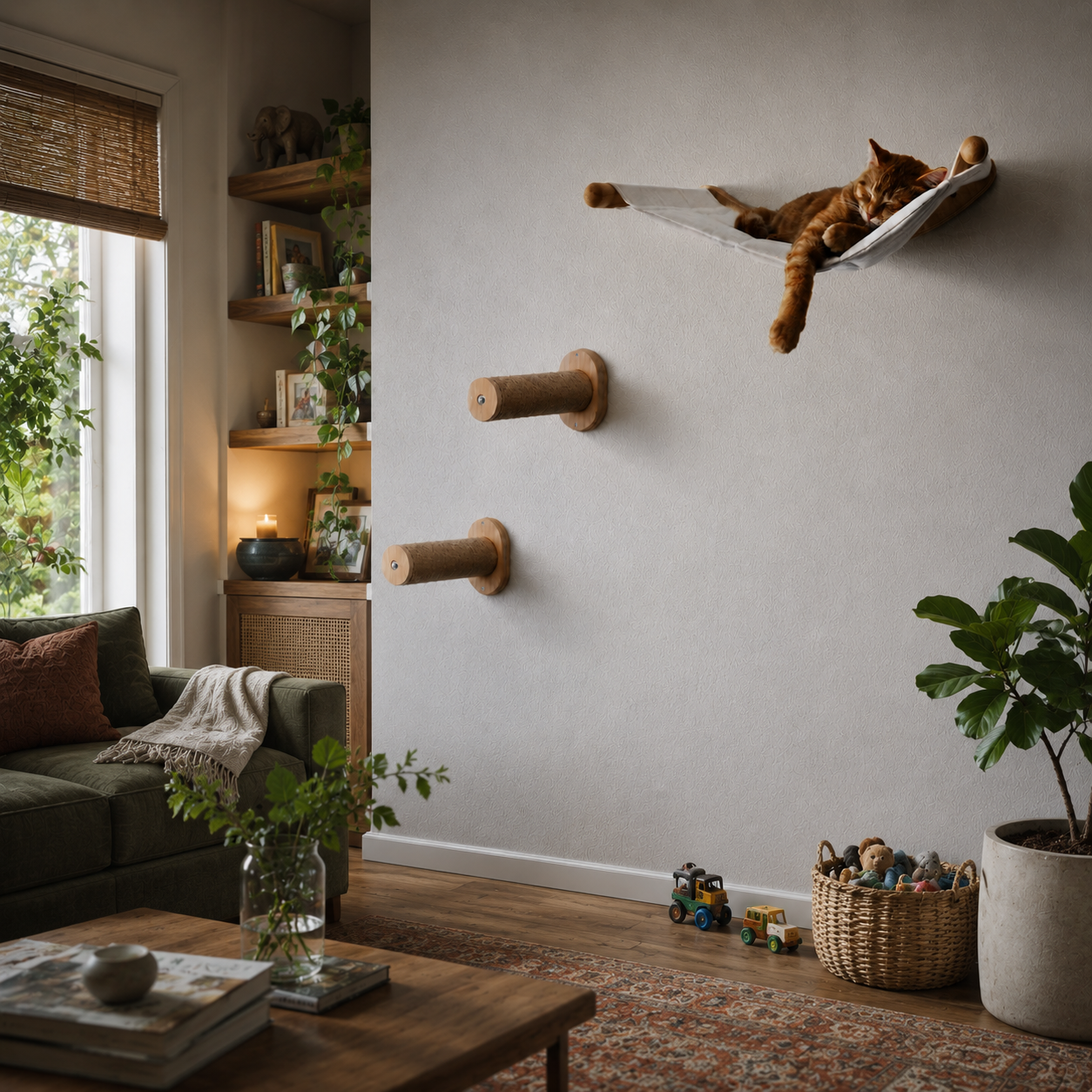
The most effective upgrade you can make is adding an elevated, warm, secure place to rest — ideally near a sunny window. That is exactly what a wall-mounted cat hammock is designed to do, and it does it without taking up any floor space or looking like pet clutter.
HALTO is a single wall-mounted hammock in solid wood with a soft, removable cushion — an elevated, sun-friendly perch that gives your cat the height and security they instinctively want. Mount it beside a window and you’ve created a premium nap spot that doubles as a calm piece of design.
ALTO adds two climbing steps beneath the same hammock, so your cat can ascend to their sleeping spot — satisfying both the climb and the rest in one piece. It’s ideal for younger, more active cats, multi-cat homes, or any wall you’d like to turn into a proper destination.
Both share a washable replacement cushion, so the sleeping surface stays fresh and hygienic for years. Pair either with a wall scratcher — ours uses a replaceable sisal pad — and you’ve covered two of your cat’s strongest instincts on a single wall. You can see how everything fits together across the full collection and accessories.
A quick guide to better cat sleep
To help your cat rest the way nature intended: offer at least one elevated spot; place it somewhere warm and ideally sunny; position it against a wall or in a quiet corner away from foot traffic; keep the surface clean and comfortable; and resist waking a sleeping cat, because that rest is doing real work. Get those right and your cat will sleep more deeply, wake happier, and leave your pillow alone.
So you see — there was never anything to worry about. One sleeps because one is wise, well-evolved and frankly entitled to it. Provide one a warm, elevated throne with a view, and one shall grace it with the finest sixteen hours of repose your home has ever witnessed. One’s pillow privileges may then, graciously, be revoked. — Ruby
Frequently asked questions
How many hours a day do cats sleep?
Most adult cats sleep between 12 and 16 hours a day. Kittens and senior cats often sleep more — up to 18 to 20 hours — because they need extra rest for growth, healing and ageing.
Why does my cat sleep so much during the day?
Cats are crepuscular, meaning they are naturally most active at dawn and dusk and conserve energy in between. Long daytime sleep is normal and reflects a healthy cat’s instinct to bank energy for short bursts of activity.
Should I be worried that my cat sleeps all the time?
Usually no — long sleep is normal for cats. Be cautious if increased sleep comes with other changes such as loss of appetite, hiding, lethargy, weight loss, or altered litter habits. A noticeable change in your cat’s overall pattern is worth a vet check.
Where do cats like to sleep best?
Cats prefer sleeping spots that are elevated, warm, quiet and feel secure. A raised perch near a sunny window with a wall behind it ticks every box, which is why wall-mounted hammocks make such effective sleeping spots.
Why does my cat sleep on me or on my laundry?
Those spots are warm, carry your scent and feel safe — exactly what a cat looks for in a bed. Offering a dedicated warm, elevated spot of their own, like a wall hammock by a window, gives them an appealing alternative.
Do cats need a special bed, or will any spot do?
Cats will sleep almost anywhere, but they rest more deeply when a spot meets their instincts for height, warmth and safety. An elevated, secure bed such as a wall-mounted hammock encourages better-quality sleep than a bed on the floor in a busy area.


Leave a comment
This site is protected by hCaptcha and the hCaptcha Privacy Policy and Terms of Service apply.